
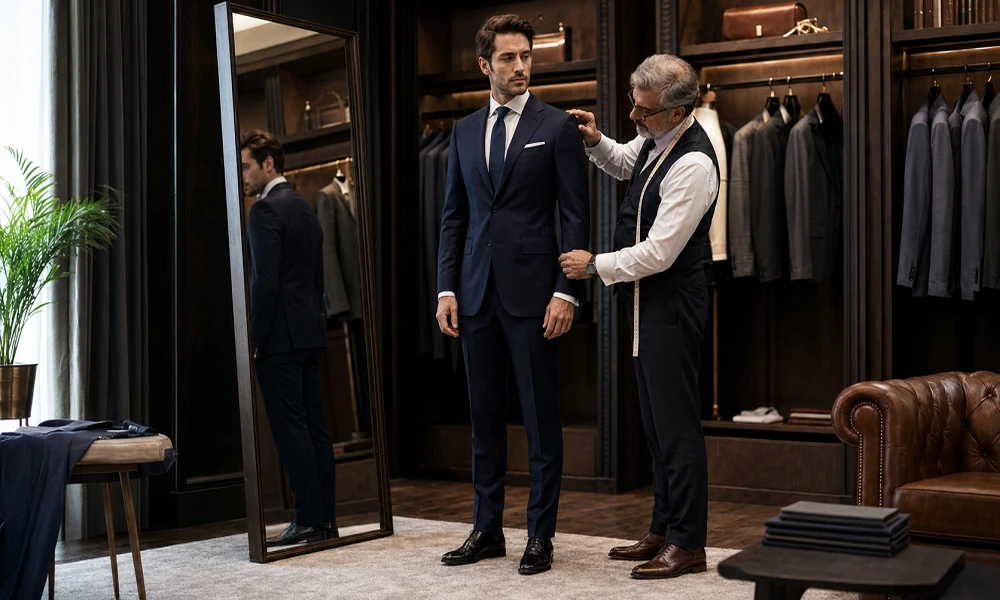
A suit makes an immediate impression. Clean shoulders, balanced proportions, and trousers that fall naturally create a composed look. Pulling, bunching, or excess fabric distracts.
The best cut follows the wearer’s build and permits natural movement.
Understand What the Fit Label Really Means
Classic, modern, and slim fits describe silhouettes, not universal measurements. Classic cuts offer more room, modern cuts create a moderate taper, and slim cuts sit closer to the body. Terms and sizes vary between makers, so the fitting room matters more than the tag.
The Suit Store’s guide to choosing a fitted suit explains how classic, modern, and slim silhouettes serve different builds and preferences. The useful starting point is the cut that already sits closest to the body’s natural proportions.
Begin with the Shoulders
The jacket shoulder is the most important checkpoint. Its seam should finish near the natural edge of the shoulder. The fabric should lie smoothly, without a dent below the sleeve head or a ridge extending past the body.
Shoulders are also difficult and expensive to rebuild. Texas A&M guidance on altering ready-to-wear garments notes that major changes around the neckline, shoulders, back, and upper chest are often limited by the garment’s existing seams. It is wiser to choose a jacket that begins correctly in these areas and use tailoring for smaller refinements.
Check the Jacket from Every Angle
Button the jacket while standing naturally. The lapels should rest flat, and the front should close without an X-shaped pull. View the back too. Horizontal creases may indicate tightness, while folds beneath the collar can signal poor balance.
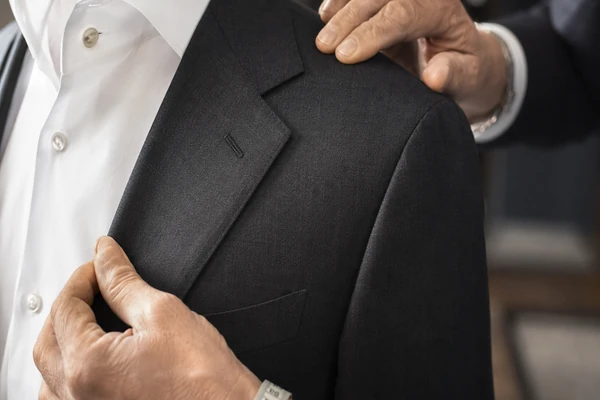
The collar should sit close to the shirt. Sleeves should show a small, even amount of cuff, while the jacket length should balance the torso and cover the seat. These details work together, so changing one can alter the overall proportion.
Look Beyond a Static Mirror Pose
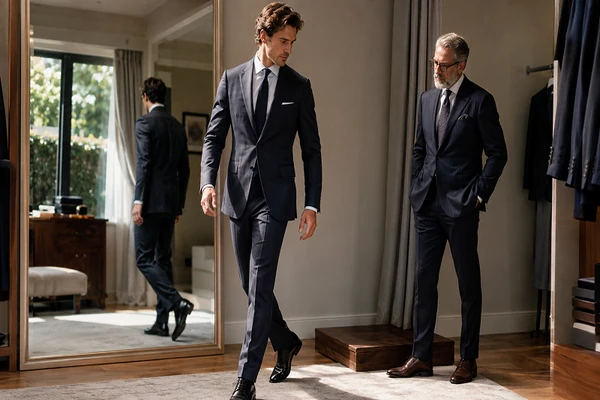
A suit must work while the wearer sits, walks, reaches, and turns. Test each action. The jacket may feel structured, but it should not restrict ordinary movement.
Trousers should sit securely at the waist. The seat should remain smooth, the thigh should allow a natural step, and the hem should meet the shoe with an intentional break. Wear the shirt, shoes, and socks planned for the occasion because they affect cuff exposure, trouser length, and overall balance.
Use Alterations with a Clear Purpose
Good alterations refine a sound foundation. Sleeve and trouser length, modest jacket shaping, and small trouser-waist changes are common finishing steps. A tailor can also assess posture and the way the jacket hangs.
Avoid buying a severely tight or oversized suit because the price is attractive. Extensive reconstruction can change the design or still fail to create a clean result. Ask what can be adjusted and what it will cost before committing.
Match the Silhouette to the Occasion
A modern cut works across offices, weddings, interviews, and dinners. A classic silhouette offers comfort, especially for broader or athletic builds. A slim cut can feel contemporary when it follows the body without strain.
Personal preference matters, but a timeless suit should support confidence rather than demand constant adjustment.
Protect the Finished Shape
After tailoring, proper care helps preserve the result. Use a supportive hanger, empty heavy pockets, and let the suit air between wears. Follow its sewn-in instructions rather than assuming every wool or blended garment needs identical treatment.
The Federal Trade Commission’s clothing-care guidance explains that care labels must provide a safe cleaning method and any warnings needed to prevent damage. Reading that label before cleaning or pressing can help protect the fabric, lining, buttons, and carefully adjusted shape.
Frequently Asked Questions
Should a suit feel tight when it is new?
No. It may feel structured, but it should button cleanly and permit normal movement. Pulling lines, restricted arms, or pressure across the chest suggest a different size or cut is needed.
Which part of a suit should fit correctly before alterations?
Prioritize the jacket shoulders, upper chest, and collar. These areas are harder to reconstruct than sleeve length, trouser hems, or modest waist adjustments.
Is slim fit always more flattering?
No. A flattering silhouette follows the wearer’s proportions without strain. Modern or classic cuts may create a cleaner line for broader, athletic, or comfort-focused builds.
Find the Cut That Feels Natural
The right suit begins with honest evaluation. Compare silhouettes, inspect the shoulders, test movement, and plan sensible alterations. When every line feels balanced, the wearer can focus on the moment rather than the clothing.
Explore The Suit Store online or visit a location to compare cuts and find professional guidance for a polished, comfortable result.
